


Wind-Proofing Your Booth: Anchors, Weights, and the Setup Most Vendors Get Wrong
- The Elephant Guru

- Nov 26, 2025
- 4 min read
Updated: Jan 24

There’s nothing quite like arriving at a market just as the sun comes up, sipping your coffee, and feeling that first little breeze move through your canopy. Sometimes it’s harmless—a soft Fall flutter that disappears as quickly as it came. Other times it’s a warning. If you’ve been a vendor long enough, you know that wind can go from “barely noticeable” to “full-on chaos” faster than you can say “secure that tablecloth.”
Wind is one of the most common—and most underestimated—reasons booths get damaged. Even seasoned vendors get caught off guard. A tent can lift from one unexpected gust, banners can turn into sails, and displays can tumble with no warning at all. And once it starts, you don’t get a do-over. Your setup has to be prepared long before the wind decides what kind of mood it’s in.
That’s why understanding proper anchoring—not just “some weights,” but real anchoring—is one of the most important parts of outdoor vending.
Why Wind-Proofing Matters More Than People Think
Ask around at any market and you’ll hear stories. The tent that rolled three booths down. The display that flipped and shattered handmade ceramic pieces. The canopy that somersaulted overnight during a sudden burst of wind and ended up wedged in a tree.
Small gusts cause irritation. Big gusts cause damage. And unpredictable gusts? Those are the ones every vendor should plan for.
Pro Tip: If wind can get under it, around it, or through it—it can move it. Design your booth to deny wind leverage, not test your luck.
Wind doesn’t care how pretty your booth looks. It only cares about leverage, lift, and how many opportunities you’ve given it to grab onto something and pull.
The Biggest Setup Mistakes Vendors Make
Even confident, experienced vendors accidentally set themselves up for trouble. Some of the most common mistakes include:
Using weights that are too light. Five- or ten-pound weights might keep a tent from shifting during calm weather, but they do almost nothing in real wind. You want 25–40 pounds per leg—minimum.
Not securing weights to the canopy frame. Weights sitting next to a leg provide almost no stability. They must be strapped, clipped, or locked to the canopy itself.
Hanging things that catch too much wind. Flags, feather banners, oversized backdrops, and loose vinyl signs can act like sails. Even small accents create drag.
Raising the canopy before anchoring it. One early gust can lift a frame that isn’t weighted yet.
Ignoring the windward side. The side facing the wind needs to be secured first and checked most often.
Wind-proofing is strategy—not luck.
Start With Proper Weight (and a Solid First Set)
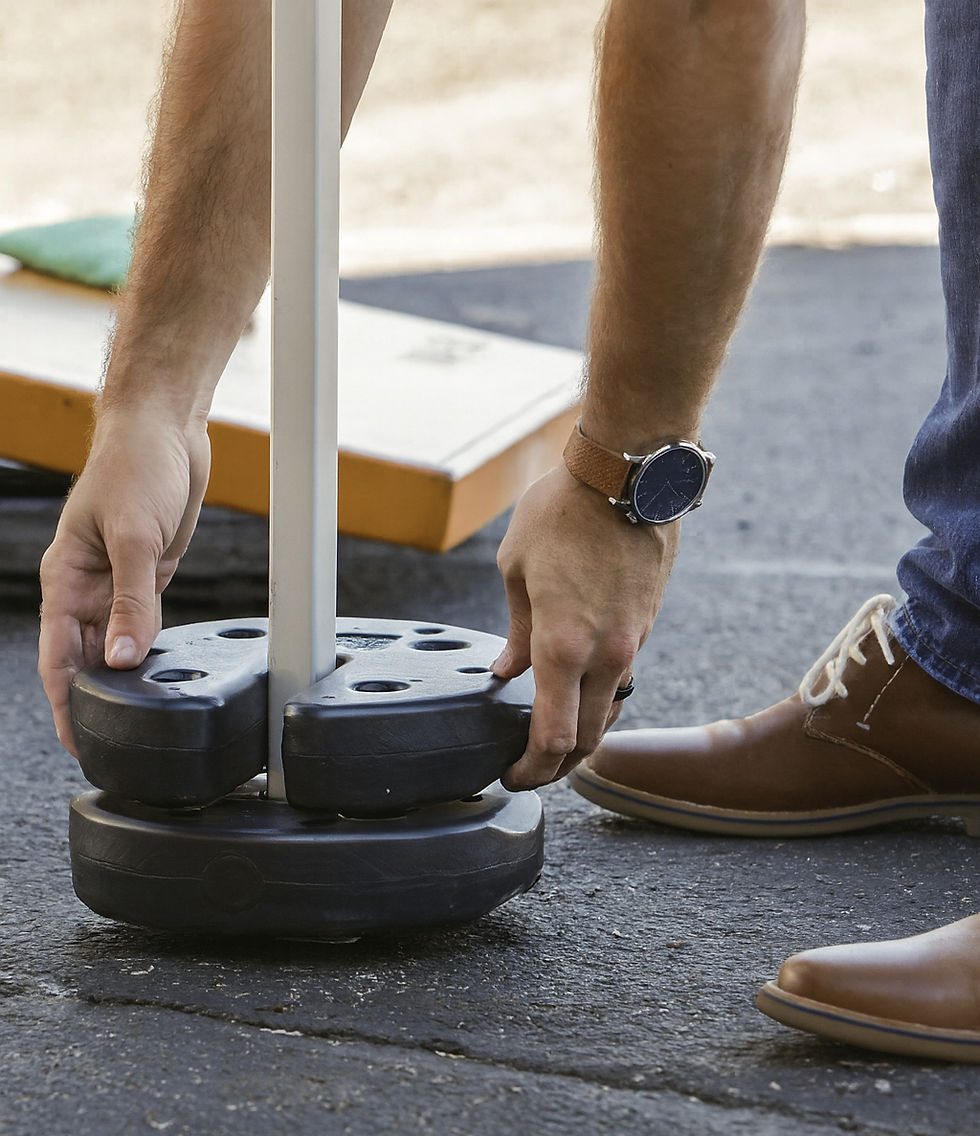
One of the smartest investments you can make is a quality weight set made specifically for canopies. If you’re just getting started—or if you’ve realized your current setup isn’t cutting it—here’s a reliable option:
👉 40 Pound Canopy Weight Set of 4 (As an Amazon Associate, I earn from qualifying purchases.)
This is a strong starter set for most vendors, and on particularly windy days, you can simply add a second set to double your stability. Many long-time vendors keep 6–8 weights in rotation depending on the season, the terrain, and the forecast.
What to Remove on Windy Days (Even If It Looks Good)
Some items just don’t play well with wind:
Tall feather flags
Canopy corner flags or pennants
Large vinyl backdrops
Loose tablecloths
Lightweight vertical displays
Product signage that isn’t clipped tightly
If wind speeds rise—or if gusts become sudden and unpredictable—take them down. It’s better to have a safe booth than a decorative one that’s about to take flight.
Your Booth Layout Matters More Than You Think
If you know ahead of time, it's going to be a particularly windy day, a wind-smart booth doesn’t just rely on heavy weights; it reduces risk everywhere.
Keep products lower and weighted.
Anchor table coverings with clips or elastic straps.
Use heavier containers rather than lightweight risers.
Position displays so they can’t tip forward from a gust.
Reinforce banners with extra zip ties or clamps.
Even small adjustments make a big difference in how your booth behaves under stress.
Insurance: The Backup You Hope You Never Need
You can do everything right and still experience a weather surprise. That’s why vendor liability insurance is so important. It protects you if:
Your tent or display injures someone
Your canopy flips and damages another booth
Wind sends your signage into a vehicle
A sudden gust knocks over part of your setup
Accidents happen—even to the most prepared vendors. Insurance ensures you’re not paying for wind damage out of pocket.
Pro Tip: Insurance doesn’t stop accidents. It stops accidents from becoming business-ending events.
Don’t Miss Your Free Guide
If you want a simple, go-to resource you can print and keep in your vendor bag, grab your free Wind-Proofing Your Booth Guide + Checklist. It covers:
What to look for before setting up
What to bring for windy days
What to avoid
Step-by-step setup actions
Safety reminders
Emergency reinforcement items
And more
Consider it your quick-start companion for breezy markets.
Final Thoughts: Wind Happens—Preparation Wins
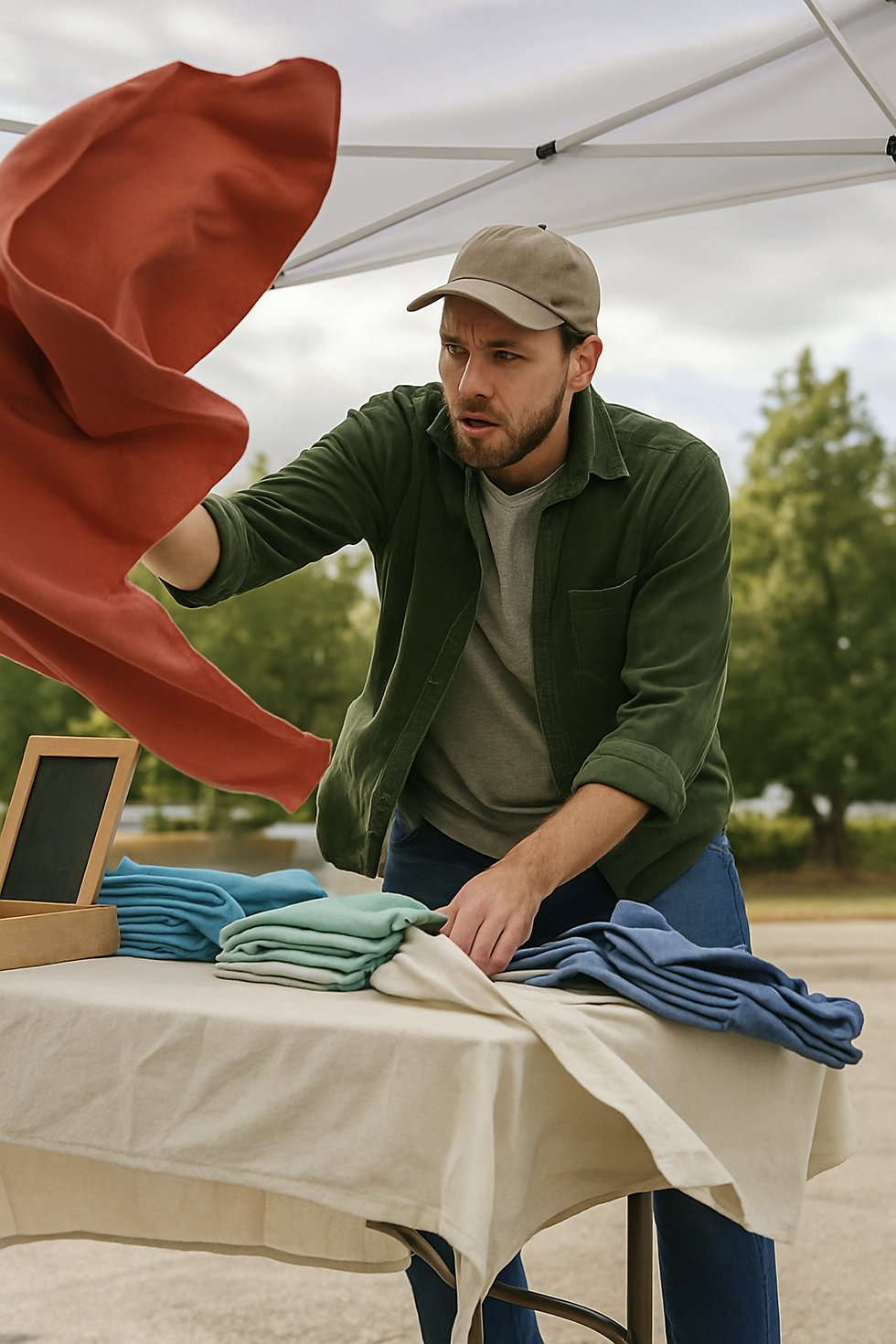
Outdoor vending will always come with a few wild cards, but wind doesn’t have to be one of them. With the right weights, the right setup strategy, and a few smart adjustments, you can protect your booth, your products, and your peace of mind.
Wind-proofing isn’t about fear. It’s about being ready.
And once you build these habits into your routine, they become second nature—letting you focus on what really matters: connecting with shoppers, selling confidently, and enjoying the market no matter what the weather decides to do.


Comments